
ARGES Ammonia Sensor by Keynes Controls
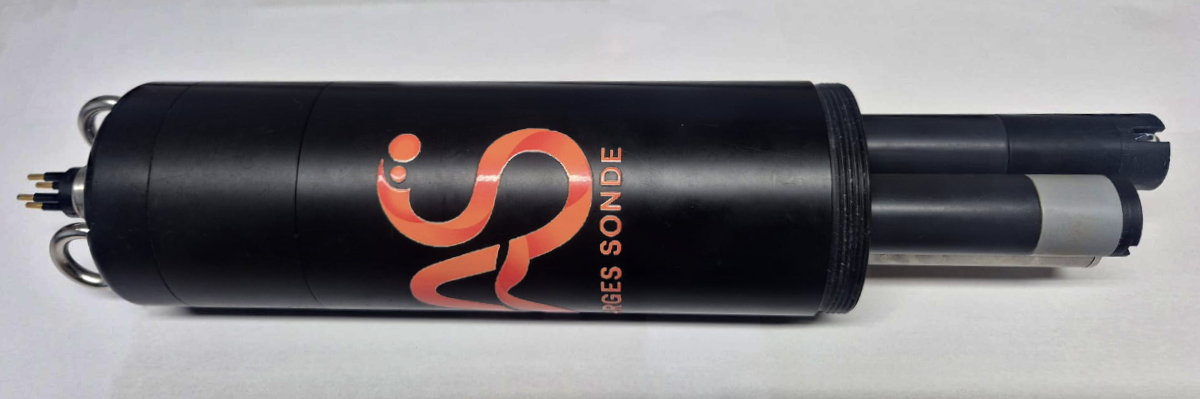
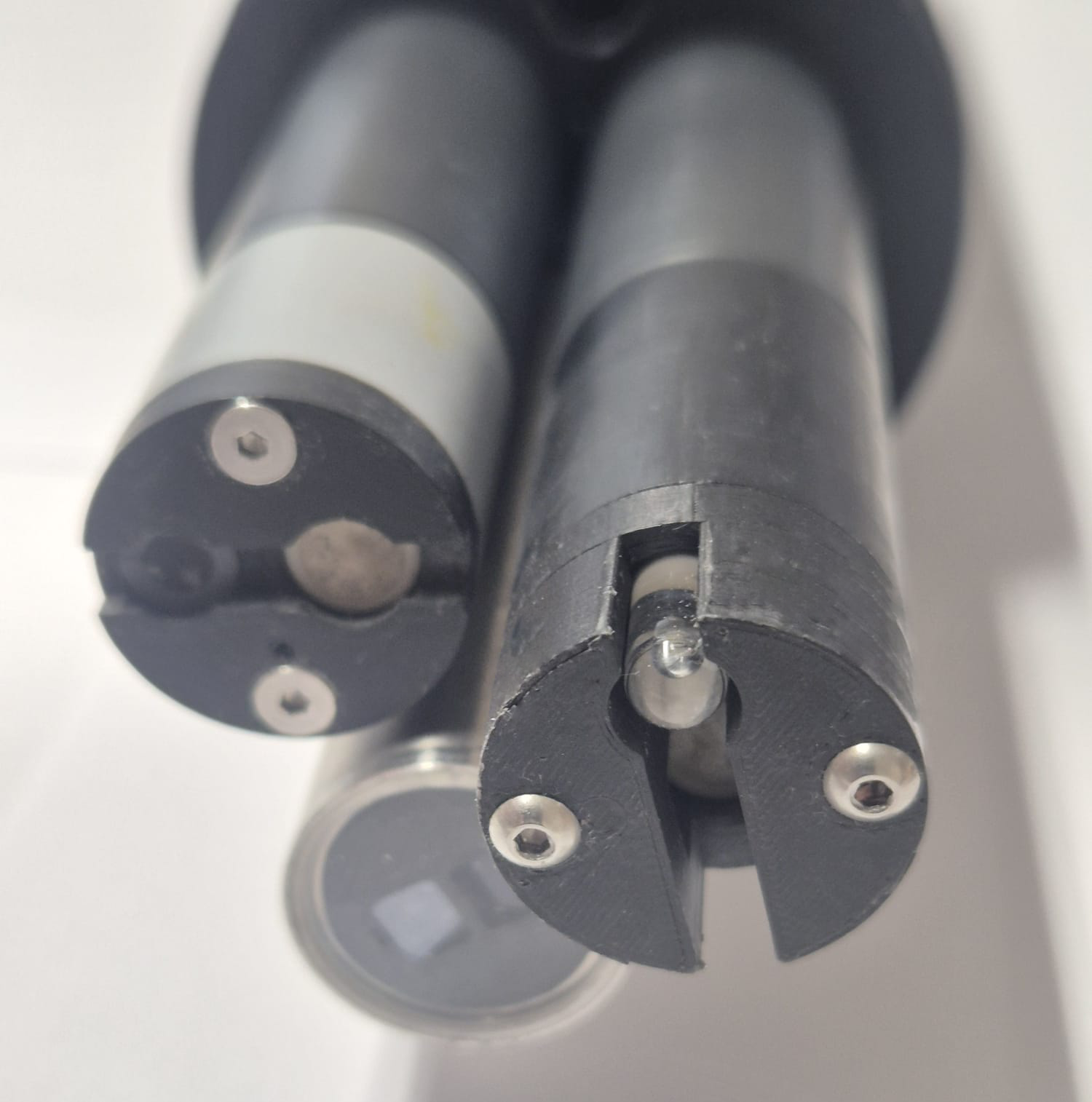
The Keynes Controls AMONIA Sensor system is a combination of sensors that are used to report the Ammonia-Nitrogen level dissolved in a water source.
Dissolved ammonia cannot be detected by a single selective-ion sensor. Keynes uses a combination of sensors and a temperature corrected mathematical model to determine the level of ammonia that is present in the sample. . The model calculates the amount of un-ionised ammonia based on the water sample pH, ammonium ion concentration and temperature measurements. Keynes Controls laboratory tested temperature compensated algorithm even adjusts the acid dissociation constant of ammonium for temperature.
The images above show a Keynes 3 Port multiparameter housing that can accept any combination of sensor. The sensors shown are ammonia, tryptophan and pH.
Sensor Combination
ARGES Ammonium + ARGES pH
Keynes Control uses a combination of the ARGES Ammonium and pH sensors to determine the ammonia concentration in water. Each of the chemical sensors has a built-in temperature sensor.
The sensor can be deployed in a multiparameter housing and for long-term applications a submersible brush can be used to clean the sensors between measurements.
Pollution Monitoring
Combining the ammonium and pH sensors along with additional sensors such as Tryptophan, Turbidity, CDOM, Nitrite gives a very clear picture to the quality of a water source and enables the tracing of local environmental issues to be carried out.
Temperature and pH level effects
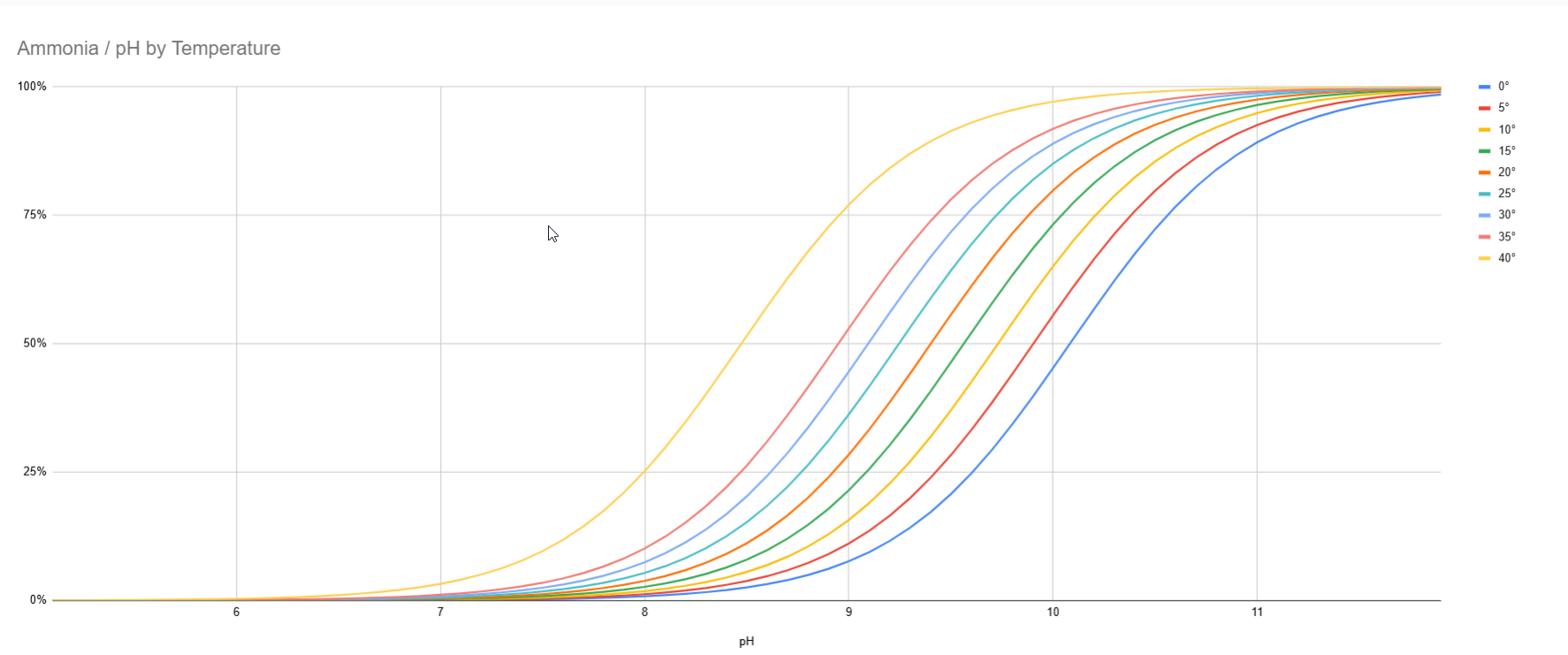
The amount of ammonia that is dissolved in water is dependent upon pH and temperature.
AMMONIA - AMMONIUM
Both Ammonia and Ammonium compounds contain Nitrogen and Hydrogen. Ammonium contains 4 Hydrogen and 1 Nitrogen and Ammonia 3 Hydrogen and 1 Nitrogen, as a result Ammonia smells pungently and Ammonium very little small.
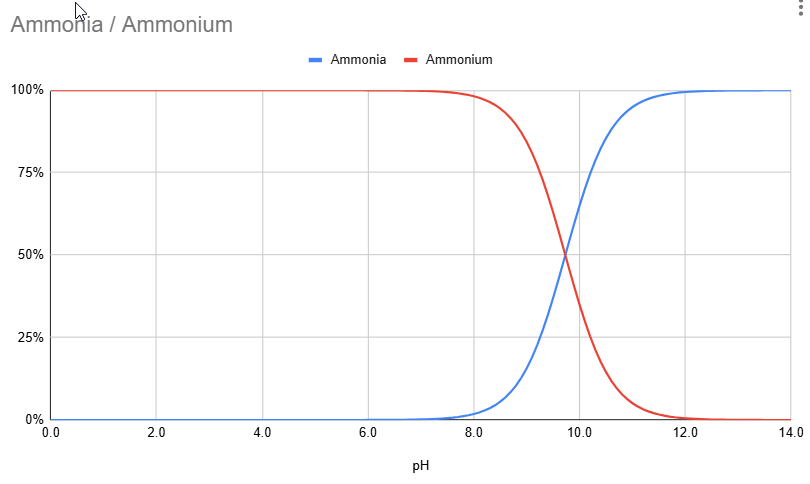
Together, the two forms of ammonia are called TAN which means Total Ammonia Nitrogen.
The graph below shown below shows the % ammonia compared to ammonium in water at various temperatures and pH values.
The second plot shows the % ammonia compared to ammonium-ions in water at pH 7 and 10 Deg C as is typical in the UK.

Agricultural & Industrial Runoff
Highly-concentrated levels of ammonia in local water ways can also be detected where there are elevated levels of animal waste nearby, for example, where intensive animal farming occurs or local sewage treatment is not being carried out correctly.
Sources of Ammonia in water
- Municipal waste treatment outfalls
- Septic seepage
- Nitrogen based fertiliser.
- Agricultural and urban runoff (fertiliser)
- Manure application
- Concentrated animal feeding operations
Additional Material:
Toxic levels of ammonia will vary and is dependent upon the water source, pH and temperature. Toxicity to aquatic life has been reported at levels between 0.50 and 20 mg/L.
Indirectly, an ammonia build-up can enhance the growth of toxic algal blooms that 'choke' a body of water, leading to the reduction of dissolved oxygen therein.
Excess levels of ammonia is a common cause of fish deaths.
Evidence of Ammonia
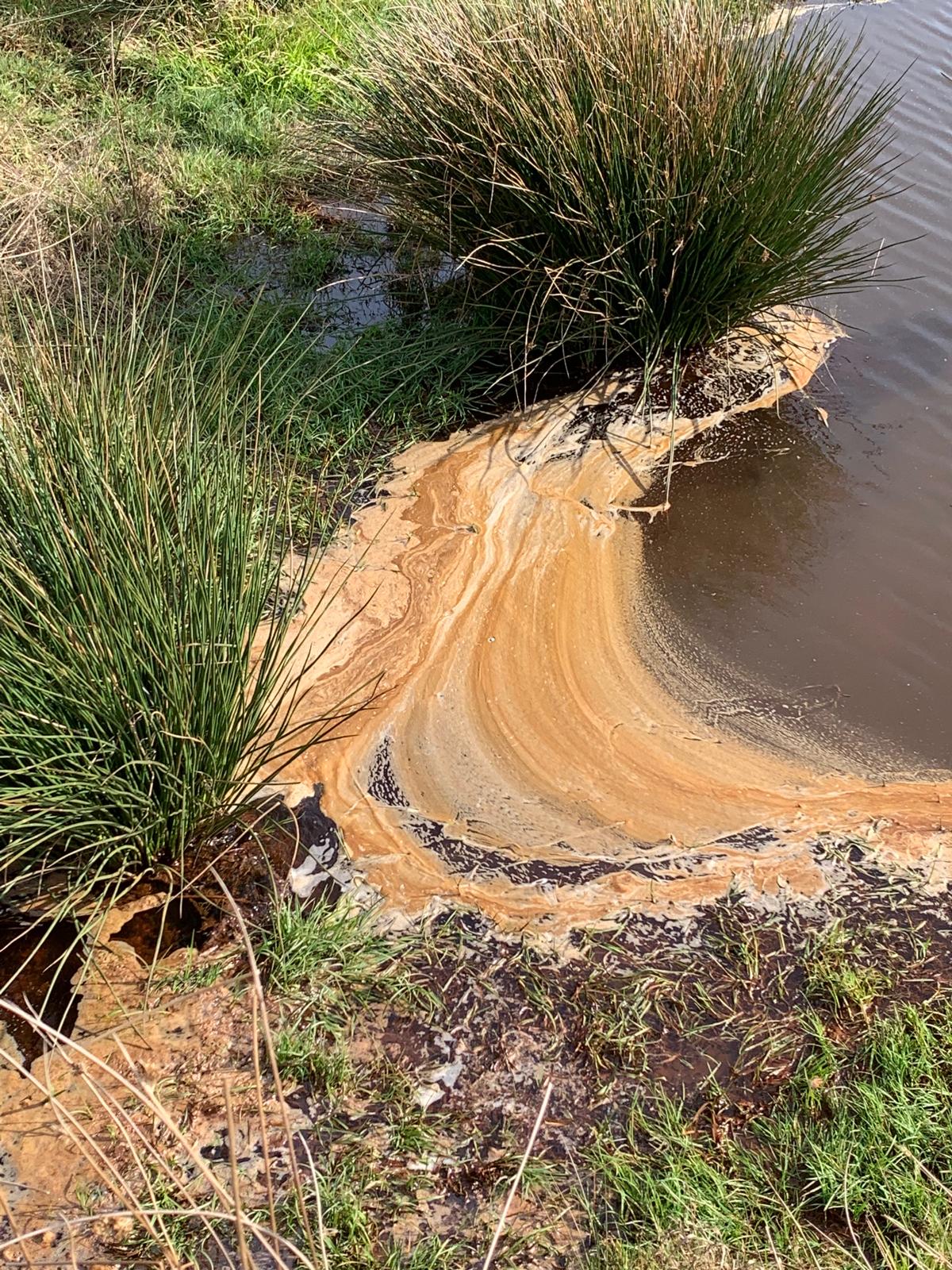
- Foul Odour
- Presence of Organic waste
- Presence of organic suspended solids.
Product Features
| TYPE | RANGE (Typical levels) |
| Solid State ISE sensor. | Combination of Ammonium, pH and Temperaure sensors |
| Concentration range: | 0.02 to 40 ppm depending on temperature and sample pH. Typical for water system. |
| Resolution: | 0.01 mg/l |
| Accuracy: | +/- 10% of range reading - related to perforamnce pH and ammonium sensor |
| Operation |
Stand-alone and SONDE Multi-parameter |
| Sensor life: | Approximately 6 months, depending on usage. |
| Interference IONS | K+ Na+ |
| pH Range | 5 - 11 |
| Protection | SONDE Cover |
| In-built Digital Communications | SDI12 / RS485 / MODBUS |
| Full Digital Operation | |
| Operating Temperature | 1-30 Deg C - caculation error occurr above this level. |
| SI Units |
Ammonia ppm, Ammonium ppm, pH, Water Temp DegC |
Calibration Summary
The ARGES Ammonia Sensor System by Keynes Controls is a group of sensors that when combined determine the amount of dissolved ammonia in water. The sensors are the ARGES AMMMONIUM and pH sensors.
The ARGES Ammonium and pH sensors can be combined inside a multiparameter SONDE housing and operate along side additional sensors such as Nitrite, Tryptophan and Turbidity sensors to give a clear understanding of the level of pollution in the water source.
Each of the sensors are factory calibrated before shipment. The calibration procedure is typically at 2 points close to the level into which the sensors are to operate. The ARGES sensors offer temperature compensated readings. The User has the facility to undertake calibration operations of the sensors, and this is recommended after each deployment.
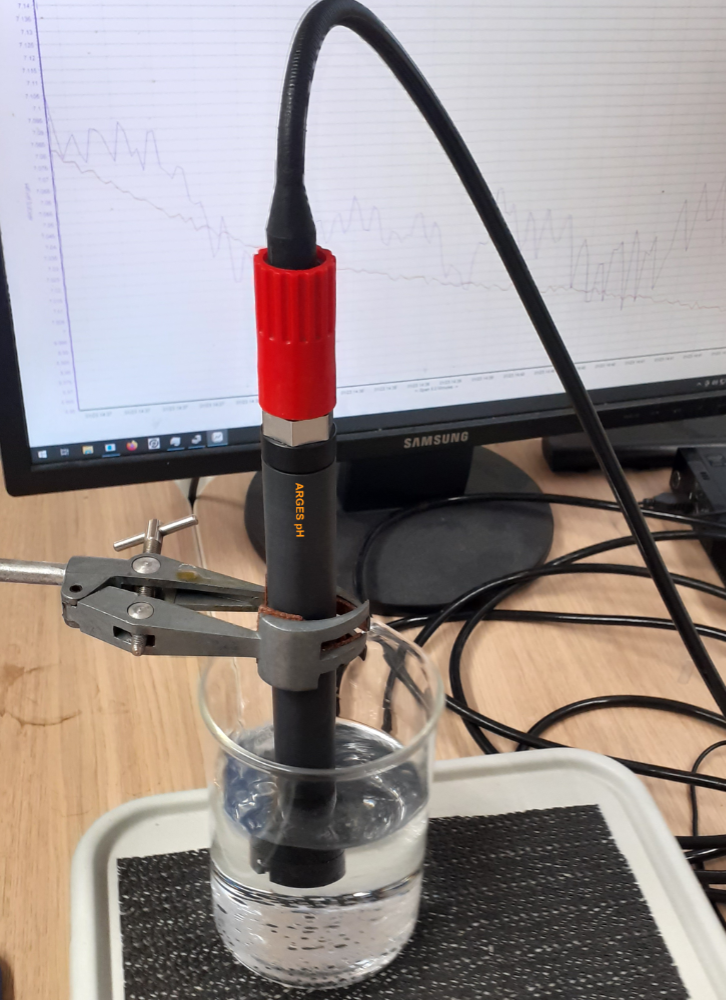
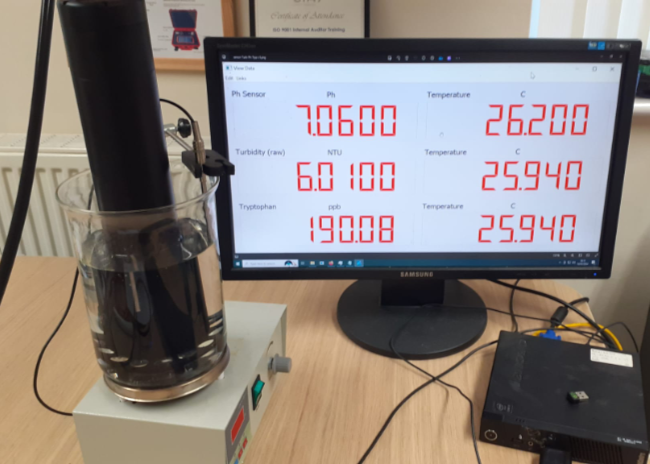
The sensors can be can be calibrated as single device as shown opposite, or grouped together in the SONDE.
For best results the calibration should be done at the temperature that the sensor will be deployed. Calibration is undertaken in collaboration with a pH and temperature sensor.
Keynes Controls offer ammonium standard solution at known concentration, and pH solution on the shop.
Storage and Handling
When not in use the ARGES Ammonia Sensor By Keynes Controls head should be kept hydrated with the protective cap attached.
Storage temperature range : 2 - 60 Degrees Celsius.
Product Specifications
| Network Type | ENVIRONMENTAL CHARACTERISTICS | |||
| SDI12 | 1.4 | Temperature Range: 0 to 60 Degree Celsius | ||
| RS485 | Ambient Range: 0 - 50 Degree Celsius | |||
| MODBUS | 16 and 32 Bit Registers | Water Temperature: 0 to 50 Degree Celsius | ||
| Maximum Depth: 20 m | ||||
| Process Electrodes: | Glass bulb pH/ Solid State Ref cells Ammonium | |||
| Interference ION | Volatile Ammonium | PHYSICAL DIMENSIONS | ||
| Material | PPMA / Stainless Steel | Length x Diameter: 22 x 220 mm | ||
| Weight: 97 g | ||||
| Settling Time |
|
Maximum Depth : 20 m | ||
| Wiper Trigger | SDI12 Command | aM! | ||
| Built-in Network Types: | ||||
| Excitation | Galvanic | SDI12 V1.4/ RS485 / MODBUS over 485 | ||
| Housing | 316 Stainless Steel and PVC | |||
| Sensor Connector | Gold Plated | Power Requirement | ||
| Voltage Range: 10-18 V DC | ||||
| Data Output | ppm, mg/l, mol/dm³, Deg °C | Standby Current: 1 mA Typical | ||
| Temp Compensated | ppm, mg/l, mol/dm³ | Reading: 10 mA Typical |
Please Note: The ammonium and pH sensors are pre-calibrated at the factory.
Supported Commands
The order for which the measurements are returned from the sensor can be user defined using the sensor configuration settings shown below. Use the free QLOG software to adjust the sensor setup and configuration.
Most Used Commands - SDI12
All of the ARGES Selective-ion Sensors have the same command set.
| Description | Command | Instrument Response |
| Start measurement | aM! | a05\r\n where 05 = time delay before measurement sent |
| Send ID | al! | a14KEYNESCOISO000014\r\n Part description assigned by Keynes |
| Address Query | ?! | Where a = ID number - 0 - 9 (standard) / (a..z) Enhanced SDI-12 0 - 9 / a - z for RS485 |
| Change Address | aAb! | where a = Initial address and b = Final address |
| Start Measurement | aM! | Make a measurement - a = address of sensor Example 1M! starts a measurement for sensor with ID=1 |
| Set Output Variables | XCSTR0 | Sets the parameter order for measurements sent from the sensor - factory set BCDM |
| Read Serial Number | aXSN! | Instrument Response a+Serial-number |
| Calibration Date | aXCD! | Instrument Response a+date |
| First Calibration point - Ammonium ppm | XCA0 | Typical value = 500 |
| - | - | - |
| User Assigned Parameters | ||
| First point uncompensated (A) - mV | XCA1 | Typical Value = 23.56 mV |
| Second calibration point - Ammonium ppm | XCA2 | 50 ppm |
| Second point uncompensated (A) - mV | XCA3 | Ammonia level in mV |
| Temperature Comp % per Degree C | XCA20 | Typical 1.92 % per/Degree C |
Commonly used with: pH, Turbidity, Tryptophan
The ARGES Ammonia Sensor by Keynes Controls monitors the levels of Ammonia in water. The ARGES Ammonia Sensor by Keynes Controls readings can be affected by changes in temperature and salinity. This sensor is frequently paired with: pH, Turbidity, Tryptophan and Conductivity sensors and other temperature sensors crafted and produced by Keynes Controls.
Turbidity Sensor =The ARGES Turbidity sensor by Keynes Control is a single-channel instrument that can detect and report turbidity levels in the range of 0.5 - 1500 NTU. Read More...
Submersible pH Sensor = The Intelligent Submersible pH Sensor by Keynes Controls, is a high performance submersible sensor that has been designed to simplify the acquisition of water quality measurement parameters, Ammonia concentration and toxicity increases as pH increases, although less ammonia is required to produce toxic effects at lower pH.
Temperature Effects on Dissolved Ammonia in water.
The Toxicity of ammonia (as total ammonia) increases as temperature increases,
Tryptophan
The level of tryptophan in a water source is a good indicator of dissolved organic materials such as anaminal and human sewage.
Optional Accessories
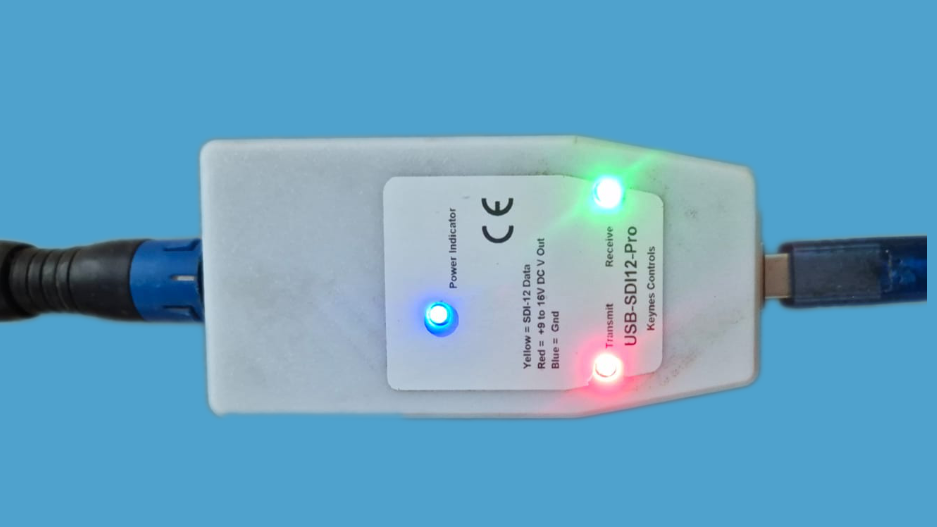
The optional USB SDI12 media converter can be used to connect The ARGES Ammonia Sensor by Keynes Controls, or a multi-parameter instrument containing the Ammonia Sensor to a Windows PC. The media converter can power the instruments directly from a PC USB port. Status LED indicators show when the instruments are making measurements.
Multiparameter Housings - SONDE
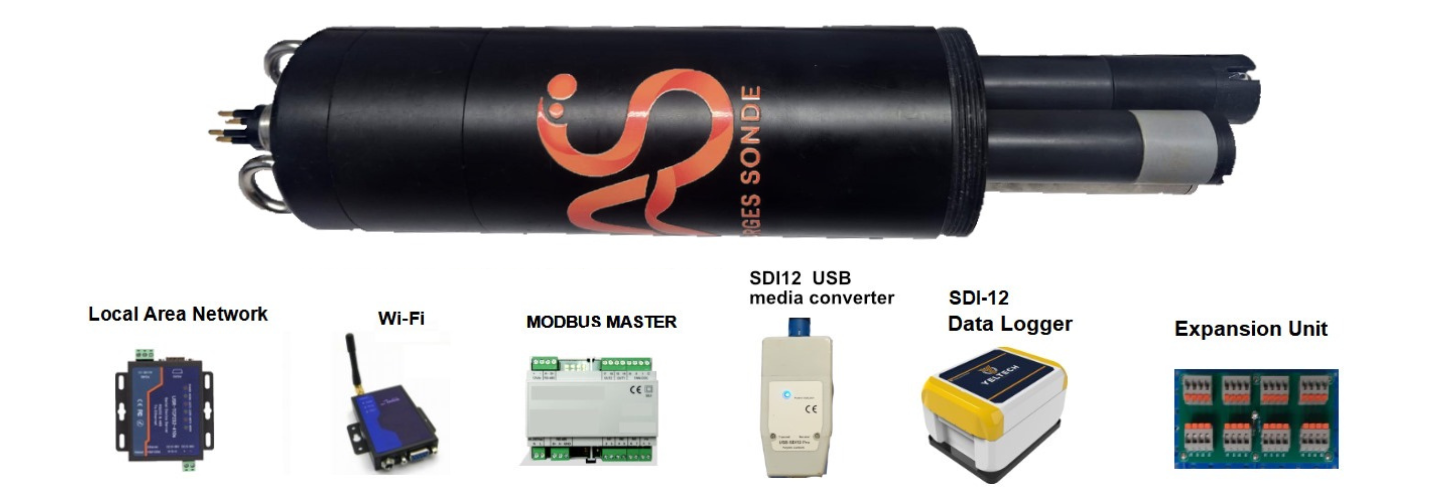
The ARGES Ammonia Sensor by Keynes Controls supports SDI12, RS485 and MODBUS digital communications as standard enabling it to be directly connected to Data Logger for remote web based reporting, onto Wi-Fi and Local Area Networks using the RS485 option. The MODBUS and RS485 option are often used to connect sensors to a PLC Controller and Display Units,. The MODBUS protocol enables the sensors to be used directly by most SCADA applications software.
Any combination of the ARGES sensors can be installed into 3-Sensor and 7-sensor SONDE multi-parameter housings.
The Ammonium sensor can be grouped with any of the other ARGES chemical sensor inside the multiparameter SONDE housings. The 3 port SONDE is currently the moist common housing used.
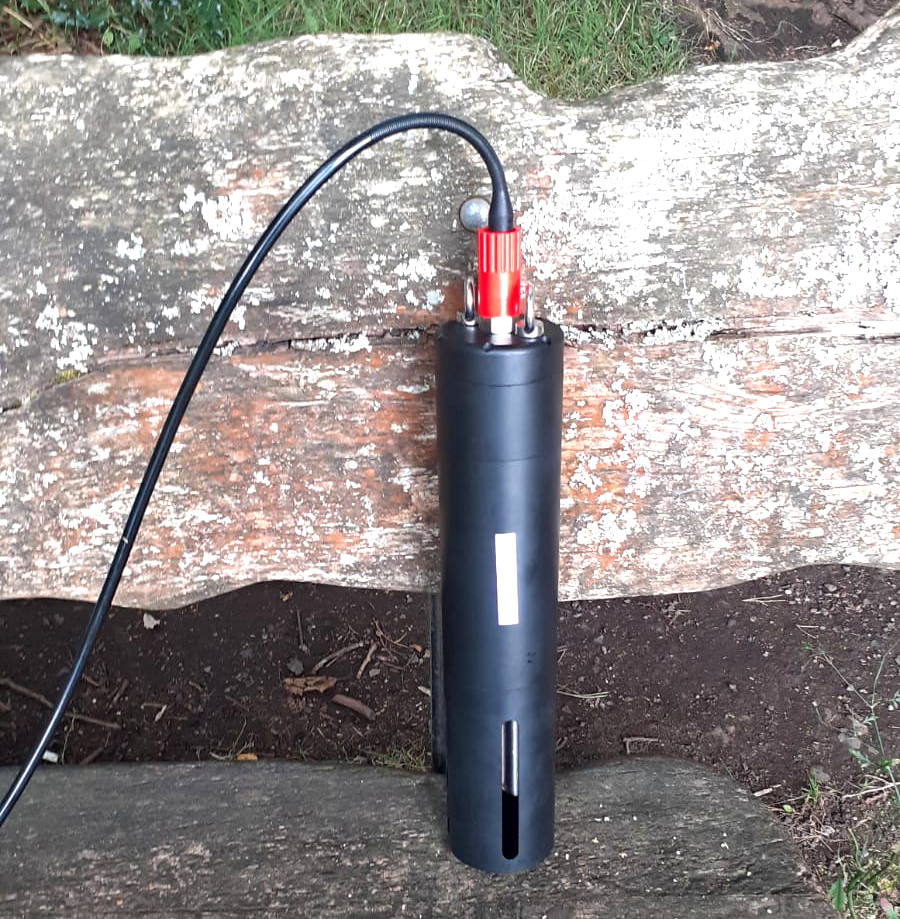
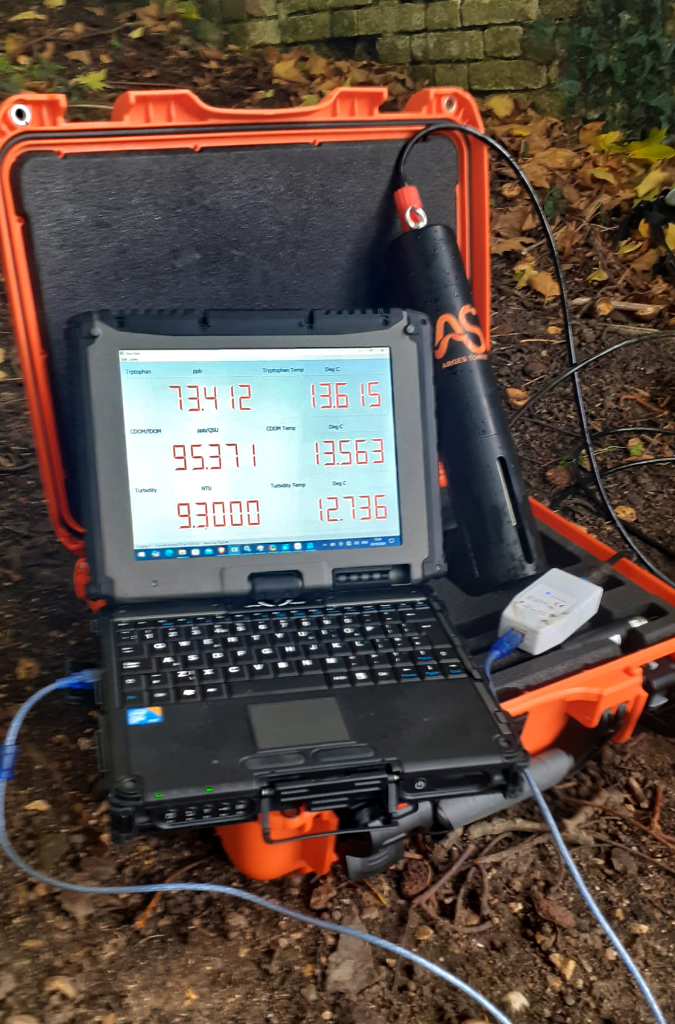
The images opposite show the standard ARGES multiparameter kit used for real-time monitoring applications.
Built-in Communication Options
MODBUS Operations
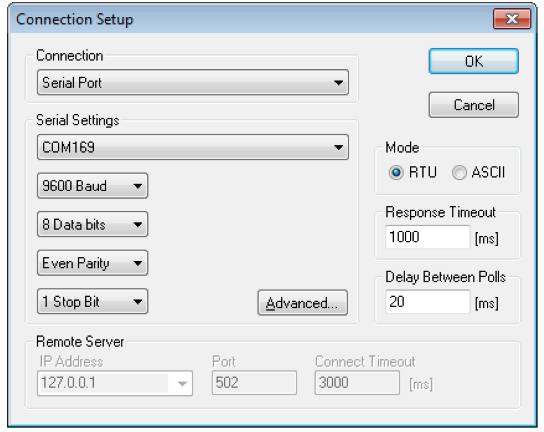
ALL of the ARGES range of chemical sensors support MODBUS network operations The sensors act as a slave unit only and can communicate to suitable controllers and SCADA systems that support the MODBUS Protocol. The sensors support 16 and 32 bit registers. .
The ARGES sensors can be connected to a PC based system using the optional USB-485-Pro media converter. This device can power the chemical sensor and supports the correct timing protocols for data transmission for MODBUS and standard RS485 network communications
The ARGES Ammonia Sensor by Keynes Controls is integrated into the Keynes Controls Q-LOG software.
Our Q-LOG software runs on the widely recognised Windows Operating system, you have the ability to calibrate, adjust instrument network address, and effortlessly display measurements on a series of panel meters and charts. Conveniently store results in text based files for quick analysis in spreadsheets.
Our highly chemical sensors provide chemical concentration and local temperature readings in SI units (Engineering units). Customise the SI units based on your instrument's capabilities, including support for multiple units like turbidity sensors, all easily managed through the device setup.
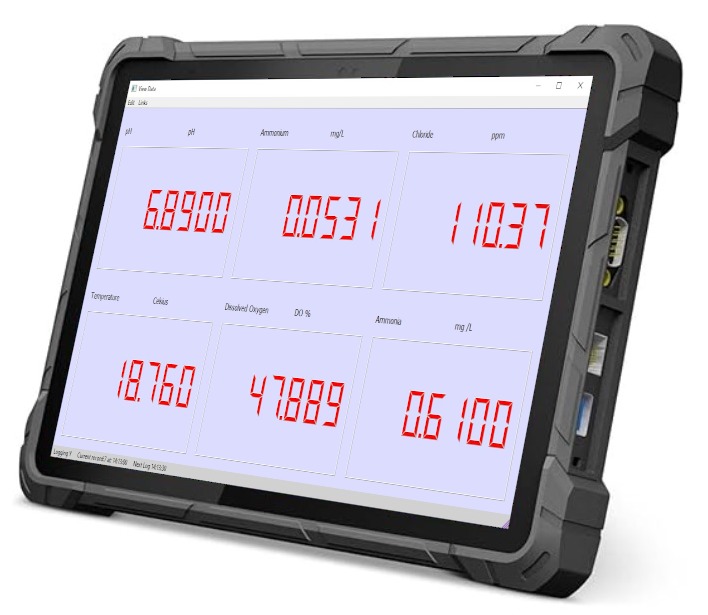
Experience the convenience of Q-LOG, enabling you to effortlessly make and install calibration values into your instrument.
Connect our Fluorometers directly to SDI12, RS485, and MODBUS networks, leveraging the versatility of Q-LOG to acquire measurements on SDI12 and RS485 networks. SDI12 communications are perfectly suited for seamless integration with data loggers, while RS485 is ideal for larger-scale network applications. Maximise efficiency by simultaneously testing all sensors of a multi-parameter instrument prior to deployment.
For added convenience, the optional USB interface allows you to comprehensively test and validate the sensors' operations, ensuring seamless integration into your own application. Trust in the performance and accuracy of our multi-parameter systems!